Thursday, February 11, 2010

COPYRIGHT(DOC2)

What is Copyright?
Who Owns Copyrights?
How Long Is a Work Copyright-Protected in the United States?
How Long Is a Work Copyright-Protected Worldwide?
What Is the “Public Domain”?
The Berne Convention & International Laws


What is Copyright?


Much of the information you will find in our “Copyright Basics” sections has been adapted from information found on the official website of the U.S. Copyright Office; see “Links” to go directly to the Copyright Office’s site for additional, more detailed information.

Copyright is a form of protection provided by the laws of the United States (Title 17, U.S. Code) to the creators of “original works of authorship,” including literary, dramatic, musical, artistic, and certain other intellectual works. This protection is available for both published and unpublished works. Section 106 of the 1976 Copyright Act generally gives the owner of copyright the exclusive right to do and to authorize others to do the following:
  • To reproduce the work in copies or phono records;
  • To prepare derivative works based upon the work;
  • To distribute copies of the work to the public by sale or other transfer of ownership, or by rental, lease, or lending;
  • To perform the work publicly, in the case of literary, musical, dramatic, and choreographic works, pantomimes, and motion pictures and other audiovisual works;
  • To display the copyrighted work publicly, in the case of literary, musical, dramatic, and choreographic works, pantomimes, and pictorial, graphic, or sculptural works, including the individual images of a motion picture or other audiovisual work; and
  • In the case of sound recordings, to perform the work publicly by means of a digital audio transmission.
In addition to copyright, certain authors of works of visual art also have the rights of attribution and integrity as described in section 106A of the 1976 Copyright Act.
It is illegal for anyone to violate any of the rights provided by the copyright law to the copyright holder.

Top

Who Owns Copyrights?

Copyright protection subsists from the time the work is created in fixed, tangible form. The copyright in the work of authorship immediately becomes the property of the author who created the work. Only the author or those deriving their rights through the author can rightfully claim copyright.
In the case of works “made for hire”, where an artist has created the work while in his/her capacity of employee, the employer and not the employee is considered to be the author and copyright holder. Where a work was created jointly by more than one artist, the authors of a joint work are all co-owners of the copyright in the work, unless there is an agreement to the contrary. Copyright in each separate contribution to a periodical or other collective work is distinct from copyright in the collective work as a whole and vests initially with the author of each contribution.
The mere ownership of a book, manuscript, painting, or any other work does not give the possessor of that work its copyright. The law provides that transfer of ownership of any material object that embodies a protected work does not of itself convey the copyright or any interest in the copyright. This remains in the possession of the creator and is often referred to as the underlying artist’s copyright, distinct from the physical object which embodies it.
Any or all of the copyright owner's exclusive rights or any subdivision of those rights may be transferred to another party, but the transfer of exclusive rights is not valid unless that transfer is in writing and signed by the owner of the copyright or such owner's duly authorized agent. Such transfers are comparatively rare in the U.S. and are almost never knowingly engaged in by European artists. For more on this subject, go to “Related Topics” and see the pages titled “Do U.S. Owners of Works of Art Also Control the Copyrights?”
Top


How Long Is a Work Copyright-Protected in the United States?
Works created on or after January 1, 1978: A work that is created (fixed in tangible form for the first time) on or after January 1, 1978, is automatically protected from the moment of its creation and is given a term of copyright protection enduring for the lifetime of the artist plus an additional 70 years after the artist's death. In the case of "a joint work prepared by two or more artists who did not work for hire," the term lasts for 70 years after the last surviving artist's death. For works made for hire, and for anonymous and pseudonymous works (unless the artist's identity is revealed in Copyright Office records), the duration of copyright will be 95 years from first publication or 120 years from creation, whichever is shorter.

Works originally created before January 1, 1978, but not published or registered by that date: These works have been automatically brought under the statute and are now given federal copyright protection. The duration of copyright in these works will generally be computed in the same way as works created on or after January 1, 1978, namely, the life-plus-70 or 95/120-year terms will apply to them as well. The law provides that in no case will the term of copyright for works in this category expire before December 31, 2002, and for works published on or before December 31, 2002, the term of copyright will not expire before December 31, 2047.
Works originally created and published or registered before January 1, 1978: Under the law in effect before 1978, copyright was secured either on the date a work was published with a copyright notice or on the date of registration if the work was registered in unpublished form. In either case, the copyright endured for a first term of 28 years from the date it was secured. During the last (28th) year of the first term, the copyright was eligible for renewal. The Copyright Act of 1976 extended the renewal term from 28 to 47 years for copyrights that were subsisting on January 1, 1978, or for pre-1978 copyrights restored under the Uruguay Round Agreements Act (URAA), making these works eligible for a total term of protection of 75 years.
The Sonny Bono Copyright Extension Act: The Sonny Bono Copyright Extension Act, enacted on October 27, 1998, further extended the renewal term of copyrights still subsisting on that date by an additional 20 years, providing for a total term of protection of 95 years from the date of first U.S. publication if the work was published before January 1, 1978. For all works created or first published after January 1, 1978, the term of protection was extended by 20 years from the previous term of protection of the lifetime of the artist plus 50 years, to the lifetime of the artist plus 70 years.
Unpublished works: All works that are unpublished, regardless of the nationality of the author, are protected in the United States. Works that are first published in the United States or in a country with which the United States has a copyright treaty or that are created by a citizen or domiciliary of a country with which the United States has a copyright treaty are also protected.
Top


How Long Is a Work Copyright-Protected Worldwide?

The term of copyright protection varies from country to country around the world, as determined by national legislation. The countries of the European Union, however, harmonized their respective terms in 1994. In the E.U. countries, the term of protection is the lifetime of the artist plus 70 years, except in Spain where the term is life of the artist plus 80 years, and in France where the two world wars have served to give artists whose careers were affected by the wars, a cumulative term of life of the artist plus 84 years and 203 days.
Top


What Is the “Public Domain”?

A work that is no longer copyright protected is considered to be “in the public domain”. It should be noted, however, that photographs of works of art in the public domain may themselves be copyrighted and will likely require a license for publication, even though the public domain works which are the subject of the photos are no longer protected.
Top


The Berne Convention & International Laws

There is no such thing as an "international copyright" that will automatically protect an author's works throughout the entire world. Generally speaking, protection against unauthorized use in a particular country depends on the national laws of that country. However, most countries do offer protection to foreign works under certain conditions, and these conditions have been greatly simplified by international copyright treaties and conventions.
The most significant international copyright instrument is the Berne Convention for the Protection of Literary and Artistic Works of September 9, 1986. The Berne Convention has approximately 170 members, including the United States which joined in 1989. The Berne Convention is based on national treatment, meaning that a Berne member country must extend the same treatment to the works of nationals of other Berne member countries as are enjoyed by its own nationals. Furthermore, the Convention obligates member countries to adopt minimum standards for copyright protection.
The Universal Copyright Convention of September 1952 ("UCC Agreement") was created to provide an alternative to the Berne Convention. The United States ratified the UCC in 1955. The UCC imposes fewer substantive requirements than the Berne Convention. For countries that are members of both the Berne Convention and the UCC, in cases of conflict between the two conventions the Berne Convention prevails.
The Agreement on Trade-Related Aspects of Intellectual Property Rights of April 15, 1994 ("TRIPS Agreement") became an annex to the agreement establishing the World Trade Organization (WTO). In addition to providing for international minimum standards of protection in the area of intellectual property, TRIPS also establishes standards for the enforcement of such rights. It also restores U.S. copyright to foreign works which were deemed to have fallen into the public domain by virtue of their failure to fulfill the formalities previously required by U.S. Copyright Law. (For more about the results of the TRIPS Agreement, see “Restoration of Foreign Copyrights in the U.S.” in the “Related Topics” section of these pages.)
The World Intellectual Property Organization Copyright Treaty of December 23, 1996 ("WIPO Copyright Treaty") also supplements the provisions of the Berne Convention to provide stronger international protection to copyrighted material in the digital environment.


COPYRIGHT

The exclusive legal rights granted by a government to an author, editor, compiler, composer, playwright, publisher, or distributor to publish, produce, sell, or distribute copies of a literary, musical, dramatic, artistic, or other work, within certain limitations (fair use and first sale). Copyright law also governs the right to prepare derivative works, reproduce a work or portions of it, and display or perform a work in public.

Copyright Clearance Center, Inc. (CCC) 
 
The largest licenser of photocopy reproduction rights in the world, CCC was established in 1978 by a group of authors, publishers, and users of copyrighted material in an effort to facilitate compliance with U.S. copyright law. CCC manages the rights to over 1.75 million works and represents approximately 9,600 publishers and hundreds of thousands of individual authors and creators.
Copyright Clearance Center, Inc. (CCC) 
 
In 1710, the first copyright law in England gave protection to the author for 14 years, renewable for a second period of equal length. In the United States, the first federal copyright law, passed in 1790, also provided protection for 14 years, renewable for an additional 14 years if the author survived the first term. Congress extended the term in 1831 and 1909, then changed the duration of copyright to life of the author plus 50 years, effective January 1, 1978. In 1998, the controversial Copyright Term Extension Act (CTEA) lengthened the period to life of the author plus 70 years for works published on or after January 1, 1978, the same as in Europe. For anonymous works, pseudonymous works, and works for hire the period is 95 years from year of first publication or 120 years from year of creation, whichever expires first. Library and consumer groups including the American Library Association (ALA) filed amicus briefs in support of a challenge (Eldred v. Ashcroft), but on January 15, 2003 the U.S. Supreme Court upheld the CTEA by a 7-2 vote. Copyright is controlled by Congress and administered by the U.S. Copyright Office of the Library of Congress (click here to see the U.S. Copyright registration of L. Frank Baum's The Wonderful Wizard of Oz). International copyright is governed by the Berne Convention and the Universal Copyright Convention.
 
copyright compliance 
 
The responsibility of a library to ensure that its interlibrary loan requests, reserve materials, instruction guides, Web pages, etc., conform to existing copyright law. In the OCLC interlibrary loan system, the codes ccg ("conforms to copyright guidelines") and ccl ("conforms to copyright law") are used by the borrowing library to inform the lending library that a request is compliant.
copyright date

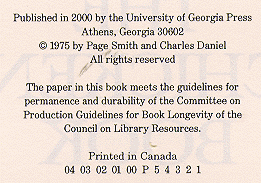
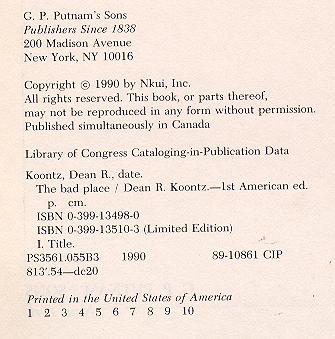
The year in which a work was first published, usually printed in the copyright notice on the verso of the title page, sometimes following the letter "c" with a circle around it (see this example). If more than one copyright date is given, the earliest is the date of the first edition, which is the same as the date of first publication. Subsequent dates indicate revisions in the text of an extent requiring renewal of copyright.
copyright depository
A library designated by law or custom to receive and preserve a specified number of free deposit copies of works published under national copyright law. In the United States, the copyright depository is the U.S. Copyright Office at the Library of Congress. In Great Britain it is the Bodleian Library. In Canada, copyright law is administered by the Canadian Intellectual Property Office (CIPO). Synonymous with copyright library.
copyright fee
The payment required by a national copyright depository to register copyright of a creative work, which must be submitted with the completed application form and a deposit copy of the work. Also refers to the fee that must be paid to the holder of copyright in exchange for the right to use all or part of a work in a manner not defined under U.S. copyright law as fair use, for example, the right to include a poem or short story in an anthology, or an excerpt or quotation in a published work. See also: permission.
copyright holder
The person(s) or corporate body possessing the exclusive legal rights granted by a government to publish, produce, sell, or distribute copies of a literary, musical, dramatic, artistic, or other work, within certain limitations (fair use), usually the author, editor, compiler, composer, playwright, publisher, or distributor. In the United States, such rights are granted by the U.S. Copyright Office when a work is registered for copyright. The name of the copyright holder is given in the copyright notice, usually printed on the verso of the title page of a book. Synonymous with copyright owner.
copyright notice
A formal announcement of legal status appearing conspicuously on all copies of a work protected by copyright and published by authority of the copyright owner. In the United States, it consists of three parts: (1) the symbol "c" inside a small circle © and the abbreviation Copr. or the word Copyright, followed by (2) year of first publication and (3) name of copyright holder. In printed books, the copyright notice appears on the verso of the title page (see this example).
copyright page
The page of a book, in most editions the verso of the title page, bearing official notice of copyright, usually the copyright symbol ("c" inside a small circle) or the word Copyright or its abbreviation (Copr.), followed by year of first publication, name of copyright holder, country of publication, and other notice and rights information (see this example).
copyright piracy
The systematic unauthorized reproduction or use, without permission and recompense, of a work protected by copyright law, usually for the purpose of profiting from such activity. This type of egregious infringement is subject to legal action by the copyright owner(s) in countries that have accepted international copyright agreements, but in countries that have not, the holder of intellectual property rights may have little recourse. See also: pirated edition.
Digital Millennium Copyright Act (DMCA)
Legislation passed by Congress and signed into law in October 1998 to prepare the United States for the ratification of international treaties protecting copyrights to intellectual property in digital form, drafted in 1996 at a conference of the World Intellectual Property Organization (WIPO). The bill was supported by the software and entertainment industries and opposed by the library, research, and education communities. Click here to learn more about the DMCA, courtesy of the Electronic Frontier Foundation (EFF). A summary is available from the U.S. Copyright Office at www.copyright.gov/legislation/dmca.pdf. See also: Technology, Education and Copyright Harmonization Act.
International Copyright Information Centre (ICIC)
A clearinghouse with headquarters in Paris, established by UNESCO in 1971 to offer assistance to publishers from developing countries in securing rights to books and other publications protected by copyright in other countries. See also: Copyright Clearance Center.
international copyright
Copyright protection extended to works published outside a country's borders, currently governed by national copyright law and international agreements, such as the Berne Convention and the Universal Copyright Convention.
Technology, Education and Copyright Harmonization Act (TEACH)
When the Digital Millennium Copyright Act of 1998 was debated, lobbyists and educators reached an impasse on new exemptions for digital distance education. Enacted in 2002 following five years of negotiations between educators and the publishing and entertainment industries, TEACH amends the DMCA to permit nonprofit, accredited educational institutions certain exemptions in the use of copyrighted materials. Under Section 110, educators and enrolled students are allowed to display or perform the entire text of a nondramatic literary work in the digital classroom without obtaining prior permission from the copyright holder and without paying fees, provided proper notice of copyright protection is given. Reasonable and limited portions of dramatic literary works, such as narrative motion pictures, operas, plays, etc., may also be used in the digital classroom.
U.K. Copyright Service (UKCS)
Stationer's Hall served as the central copyright registration office for the United Kingdom until the year 2000 when UKCS was launched as an independent witness agent, providing affordable and confidential copyright registration, secure storage of registered items, and information about the registration process and intellectual property laws and issues. UKCS maintains its own secure database of copyright registration records. Click here to connect to the UKCS homepage. See also: Canadian Intellectual Property Office, U.S. Copyright Office, and World Intellectual Property Office.
Universal Copyright Convention (UCC)
An international copyright convention drafted in 1952 under the auspices of UNESCO, revised in 1971 and ratified by over 65 countries, including the United States. Under its terms, each signatory nation extends to foreign works the same copyright protection it gives to works published within its territory by one of its own citizens. Click here to read the Universal Copyright Convention as revised at Paris on July 24, 1971. See also: Berne Convention.
U.S. Copyright Office (USCO)
The agency of the U.S. federal government responsible for administering copyright law, a unit of the Library of Congress. Although the first federal copyright law was passed in 1790, copyright functions were not centralized under the Library of Congress until 1870, and the Copyright Office did not become a separate department of the Library of Congress until 1897. In addition to administering federal law protecting the intellectual property rights of American citizens, the Copyright Office also provides expertise to Congress on matters related to intellectual property, advises and assists Congress in drafting proposed changes in U.S. copyright law, advises Congress on compliance with international copyright agreements, serves as a depository for works registered under U.S. copyright law, and furnishes information to the general public on copyright law and registration. Click here to connect to the homepage of the U.S. Copyright Office. See also: Canadian Intellectual Property Office, U.K. Copyright Service, and World Intellectual Property Office.


Censorship

CENSORSHIP
 
Prohibition of the production, distribution, circulation, or display of a work by a governing authority on grounds that it contains objectionable or dangerous material. The person who decides what is to be prohibited is called a censor. Commonly used methods include decree and confiscation, legislation, repressive taxation, and licensing to grant or restrict the right to publish.
 
The ALA Code of Ethics places an ethical responsibility on its members to resist censorship of library materials and programs in any form and to support librarians and other staff who put their careers at risk by defending library policies against censorship. The Electronic Privacy Information Center (EPIC) maintains a Web page on Internet Censorship. Compare with suppressed. See also: banned book; book burning; challenge; clandestine publication; Comstock, Anthony; expurgated; filtering; Index Librorum Prohibitorum; intellectual freedom; Motion Picture Production Code; and precensorship.
Censorship is the suppression of speech or deletion of communicative material which may be considered objectionable, harmful or sensitive, as determined by a censor. The rationale for censorship is different for various types of data censored:
  • Moral censorship is the removal of materials that censor deems to be obscene or otherwise morally questionable. Pornography, for example, is often censored under this rationale, especially child pornography, which is censored in most jurisdictions in the world. In another example, graphic violence resulted in the censorship of the "culturally, historically, or aesthetically significant" movie entitled Scarface originally completed in 1932.
  • Military censorship is the process of keeping military intelligence and tactics confidential and away from the enemy. This is used to counter espionage, which is the process of gleaning military information. Very often, militaries will also attempt to suppress politically inconvenient information even if those information has no actual intelligence value.
  • Political censorship occurs when governments hold back secret information from their citizens. The logic is to prevent the free expression needed to rebel. Any dissent against the government is thought to be a "weakness" for the enemy to exploit.[citation needed] Campaign tactics are also often kept secret: see the Watergate scandal.
  • Religious censorship is the means by which any material objectionable to a certain faith is removed. This often involves a dominant religion forcing limitations on less prevalent ones. Alternatively, one religion may shun the works of another when they believe the content is not appropriate for their faith.
  • Corporate censorship is the process by which editors in corporate media outlets intervene to halt the publishing of information that portrays their business or business partners in a negative light. Privately owned corporations in the business of reporting the news also sometimes refuse to distribute information due to the potential loss of advertiser revenue or shareholder value which adverse publicity may bring. See media bias.

precensorship
The restriction of materials from a library collection during the selection process by a collection development librarian or other person authorized to select, based on conscious or unconscious bias. Although the Library Bill of Rights of the American Library Association (ALA) charges librarians to "provide materials and information presenting all points of view on current and historical issues," some studies have found that librarians tend to avoid selecting potentially controversial books and media. The prefix "pre" added to the term "censorship" indicates that restriction occurs before library materials are made available to patrons. Compare with censorship.

    Wednesday, February 10, 2010

    Vacancy: February 2010

    Name of Institution: Victoria University of Bangladesh

    Position: Assistant Librarian

    No. of Vacancies : N/A

    Educational Requirements :
    M.A. degree in Library Science from a reputed university. Persons with third division at any level may not apply.

    Experience Requirements: 5 year(s)

    Additional Requirements :
    Would be capable of working independently with little or no supervision.
    Must have at least five years experience in relevant field.

    Salary Range : Negotiable

    Other Benefits: Attractive remuneration

    Job Source : Bdjobs.com Online job posting, Posting Date: January 30, 2010

    How to Apply: Applications with full CV and contact numbers, and two passport size photographs, must reach Registrar, Victoria University of Bangladesh.

    Application Deadline: February 10, 2010

    Company Information: Victoria University of Bangladesh Address : 58/11/A Panthapath (Barek Mansion), Dhaka-1205Web : www.vub.edu.bd

    ******************************************************************************************
    Name of Institution: Victoria University of Bangladesh

    Position: Library Officer

    Educational Requirements :
    M.A. in Library Science from a reputed university.

    Experience Requirements: 2 year(s)

    Additional Job Requirements :
    2 (two) years experience in relevant field is preferred. This may be relaxed in case of otherwise exceptionally qualified person.

    Salary Range : Negotiable

    Other Benefits: Attractive remuneration

    Job Source : Bdjobs.com Online job posting, Posting Date: January 30, 2010

    How to Apply: Applications with full CV and contact numbers, and two passport size photographs, must reach Registrar, Victoria University of Bangladesh.

    Application Deadline: February 10, 2010

    Company Information: Victoria University of Bangladesh Address : 58/11/A Panthapath (Barek Mansion), Dhaka-1205Web : www.vub.edu.bd


    Vacancy: February 2010

    Name of Institution: Scholastica Pvt Ltd

    Position: Librarian

    No. of Vacancies : 01

    Job Description / Responsibility:
    Library and book management
    Proper documentation as per procedure
    Organize and maintain Library environment sound
    Regularly update book list as per category

    Educational Requirements:
    Hons/Master in Library Science
    Relevant diploma will be given preference

    Experience Requirements :2 to 3 year(s)

    Additional Job Requirements :
    2/3 years experience in the same position preferably in an educational institution
    Good IT Skills
    Should be organized and hard working
    Good interpersonal and communication skills

    Salary Range :Negotiable

    Job Source : Bdjobs.com Online job posting, Posting Date: February 16, 2010

    How to Apply: Send Your CV to jobs@ascent-bd.com,
    or
    To DGM-HR Scholastica Pvt. Ltd
    Khawaja Tower, 95 Mohakhali CA,
    Dhaka 1212


    Application Deadline: February 25, 2010

    **********************************************************************
    Name of Institution: Pabna Science and Technology University

    Position: Assistant Librarian

    No. of Vacancies : 01

    Salary Range :15000-700x16-26200 Tk.

    Educational Requirements and Experience:
    Must have and M.A. degree in Library Science from a reputed university. At least 07 years experience in any university library/ research institution in which 05 years experience as an officer in library administration. Candidate who have 1st class in honours/masters should have 05 years experience with 03 years as officer. Candidates must be literate with computer applications.

    Age Limitation: Up to 35 years.

    Job Source : The Dauily Star, Date: 13.02.2010, Page: 25(1)

    How to Apply: For detail please see The Dauily Star, Date: 13.02.2010, Page: 25(1)

    Application Deadline: February 23, 2010